[ad_1]
A long Serbian face, an unflinching stare, lips that seem to hold back more than they release, Marina Abramović is a presence that stills a room. Now entering her 80th year, she is often described as the “grandmother of performance art”, shorthand for a career spent using her own body as both medium and method, repeatedly testing how much a human being can endure, physically, psychologically and emotionally. Abramović, whose works are featured in the sixth Kochi-Muziris Biennale, will be in Kerala for a lecture in February. Another body of work of hers will be presented by Saatchi Yates, the London-based gallery, at the India Art Fair in New Delhi.
Abramović emerged in the 1970s with confrontational works that dismantled the passive role of the viewer. In Rhythm 0 (1974), she stood motionless for six hours while the public was invited to use 72 objects on her body, from a feather to a loaded gun, exposing how quickly spectators could become complicit in violence when authority went unchecked. In the 1980s, working with her partner Ulay, the work shifted towards emotional endurance. In The Lovers (1988), the pair walked from opposite ends of the Great Wall of China to meet in the middle and end their relationship.
The 1990s marked a turn towards history and collective trauma. In Balkan Baroque (1997), presented at the Venice Biennale, Abramović scrubbed bloody cow bones while singing folk songs, responding to the wars that followed the breakup of Yugoslavia. By the 2010s, extremity had given way to stillness. In The Artist Is Present (2010), staged at the Museum of Modern Art (MoMA), she sat silently for nearly three months, meeting the gaze of visitors who often left in tears, anger, or quiet confession.
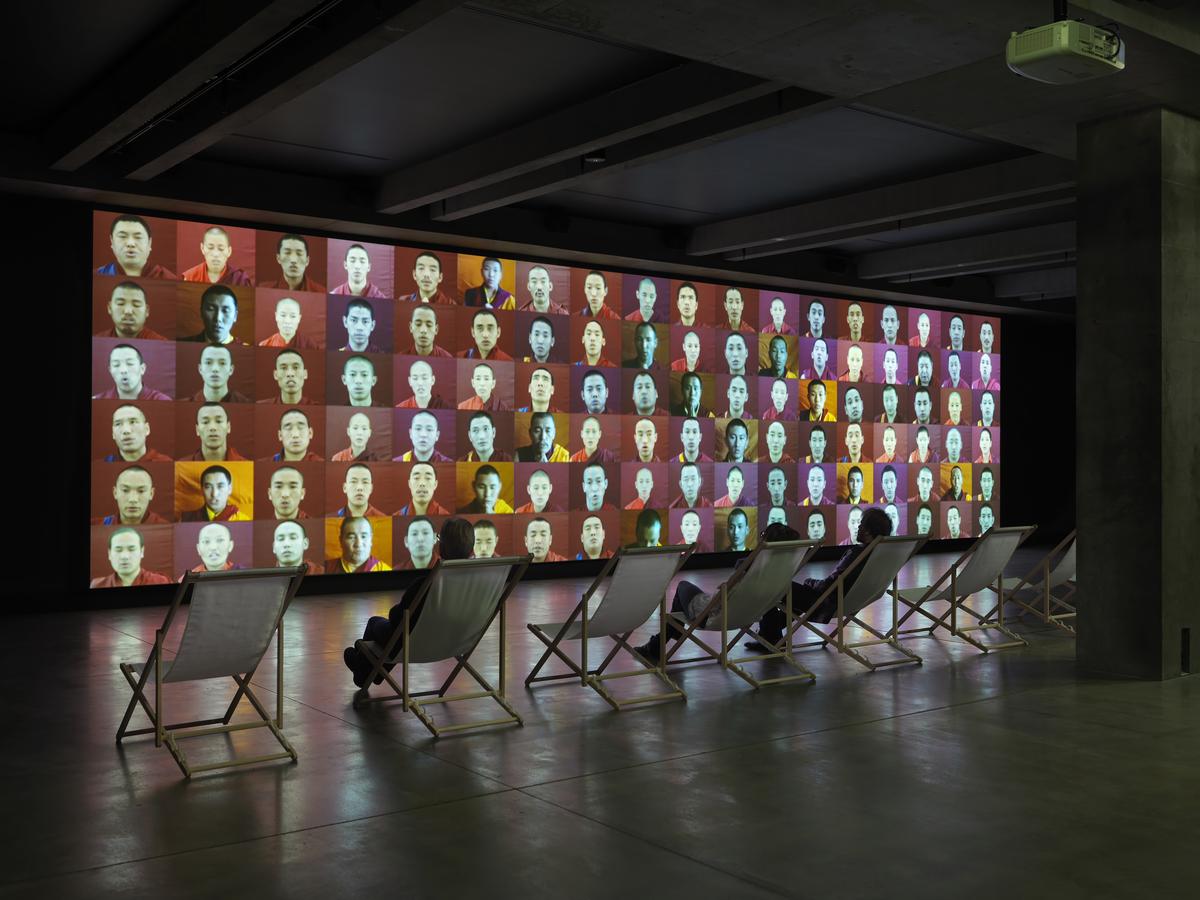
Less often acknowledged is how deeply her practice has been shaped by disciplines beyond western art history. Over decades, Abramović studied Aboriginal culture in Central Australia and Tibetan Buddhist practices in monasteries across India, absorbing rituals of repetition, fasting, meditation and endurance. During one extended visit, she recorded Tibetan monks chanting the Lotus Sutra (one of the most venerated sutras of Mahayana Buddhism).
Waterfall by Marina Abramović
| Video Credit:
Rosella Stephen
In Waterfall (2003), a monumental installation now on view at the Kochi-Muziris Biennale, their voices and faces are layered into a continuous cascade, creating a calming atmosphere for those who sit in its presence. Alongside it, the Marina Abramović Institute is presenting an archive of films, drawings and performances since its founding in 2007. The performance artist will also present The Past, Present, and Future of Performance Art, a lecture reflecting on her career and how performance has evolved as a form.
In an email interview ahead of her visit, Abramović reflects on India as a spiritual teacher, and on why, in what she describes as a moment of cultural exhaustion, she believes art can still point towards a future. Excerpts:
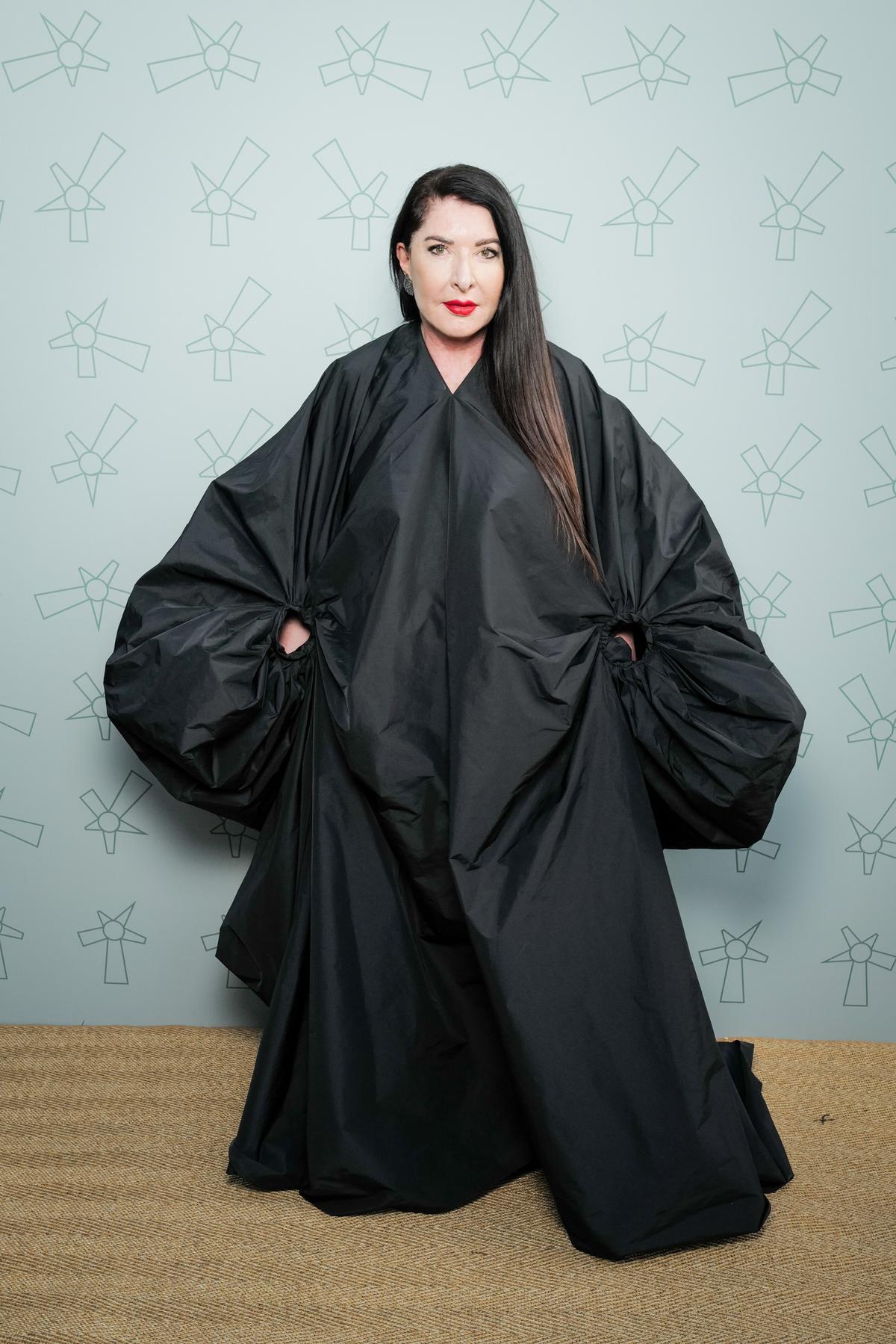
Marina Abramović at the Serpentine Summer Party 2024 in London, England.
| Photo Credit:
Getty Images
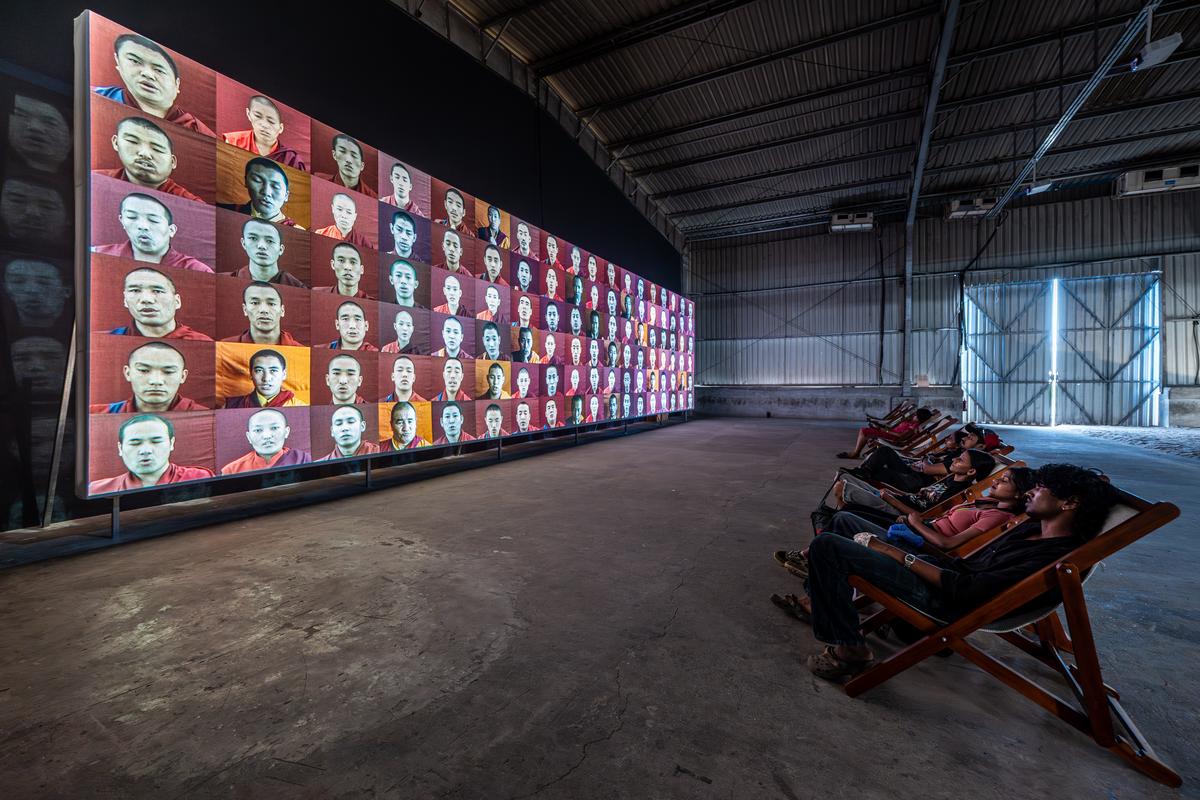
Waterfall by Marina Abramović, a three-channel video projection, KMB 2025-26.
| Photo Credit:
Courtesy of the Kochi Biennale Foundation
What has India meant to you personally, artistically, and spiritually?
Personally, India has been a great teacher. It has helped me understand the temporality of our existence on this planet. Artistically, it holds an extraordinarily complex historical and cultural heritage; it’s an endless source of inspiration and learning for my practice. Spiritually, India helped me connect mind and body, and to understand compassion, forgiveness, and the karmic circle of life.
Do you remember your first encounter with the country?
Very clearly. My first trip to India was in 1979, when I landed in Delhi. All I wanted was to go immediately to Bodh Gaya, the site where Siddhartha Gautama [Buddha] is believed to have attained enlightenment under the Bodhi Tree. I spent three months there.
Bodh Gaya then was fascinating: full of temples, teachings, meditation centres, ceremonies, and teachers offering seminars constantly. It was one of the key global meeting points for Buddhist practitioners from Tibet, Southeast Asia, and the West in the decades following the Tibetan diaspora.
After that first journey, I returned to India many times, travelling and staying in monasteries throughout the country, particularly in Himalayan regions. I call these research trips. I came to learn through lived practice, connection and experience rather than belief alone.
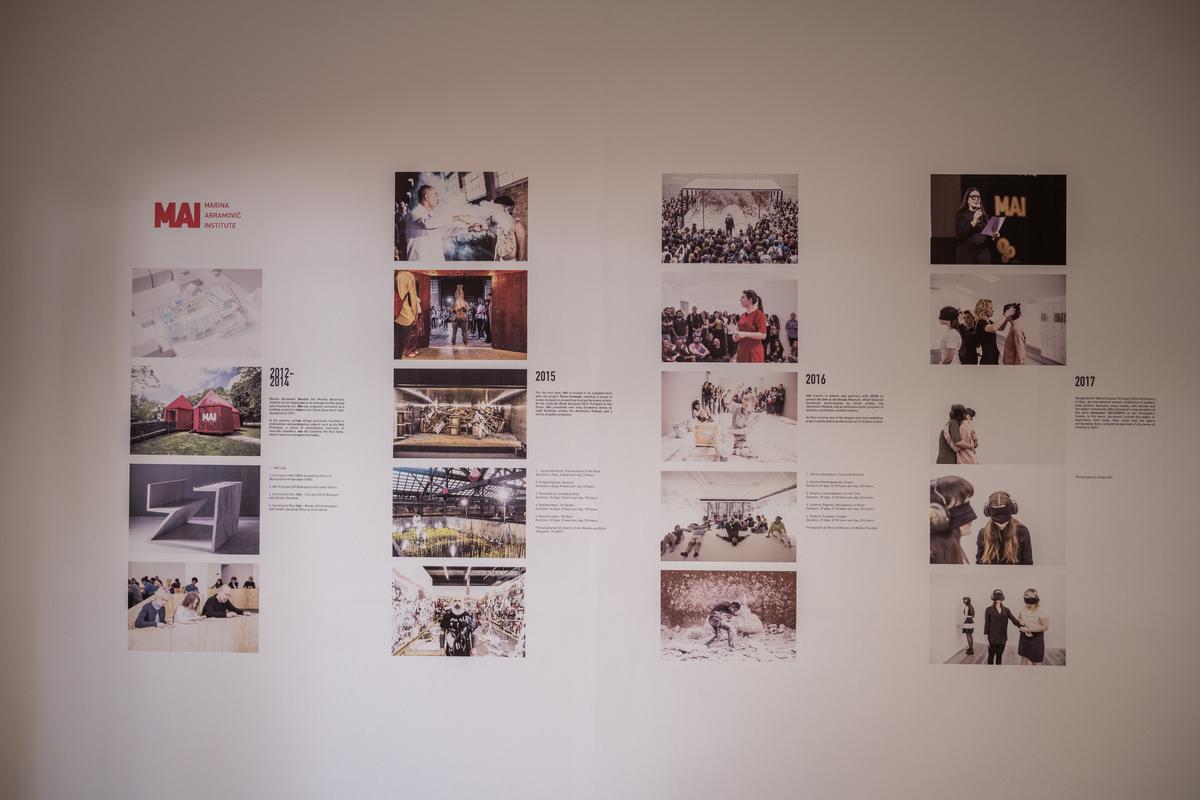
Marina Abramović Archives, KMB 2025-26.
| Photo Credit:
Courtesy of the Kochi Biennale Foundation
After more than five decades of performance, what has the body taught you about being human?
Living a long life has benefits, you have time to collect wisdom. I learnt how to live in the present, here and now. The body is where knowledge accumulates, not just the mind.
Performance art is often described as western in origin. How do you see its future now?
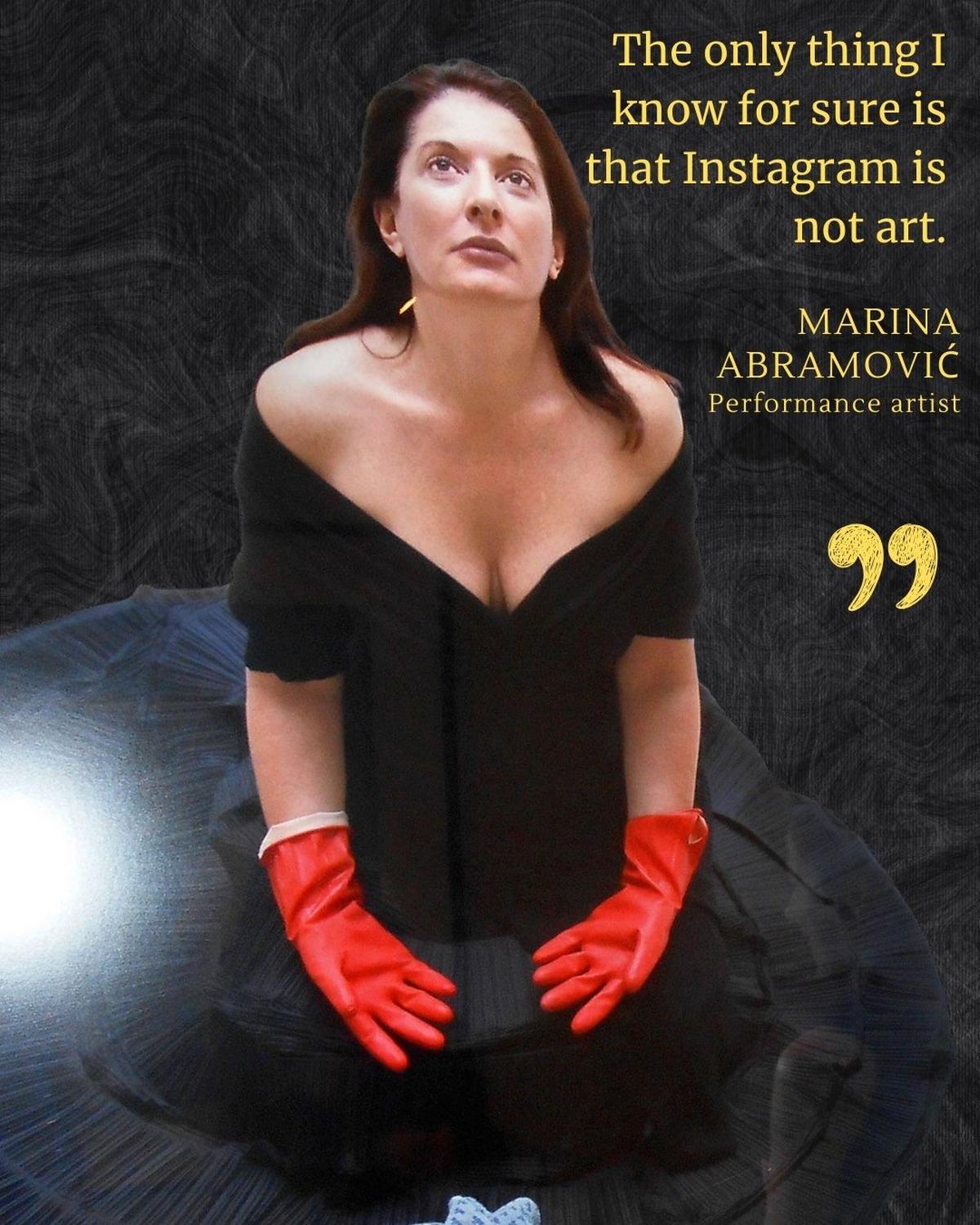
Western culture is exhausted. It’s essential to have fresh points of view, which other cultures can bring. Performance will never die. It constantly changes, like a phoenix, burning and being reborn from its own ashes. The only thing I know for sure is that Instagram is not art.
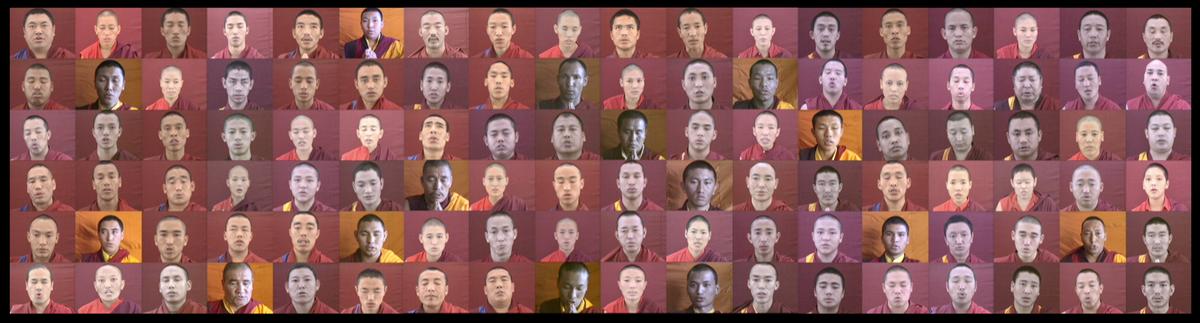
Waterfall by Marina Abramović, a three-channel video projection, KMB 2025-26.
| Photo Credit:
Courtesy of the Marina Abramović Archives 2000-2003
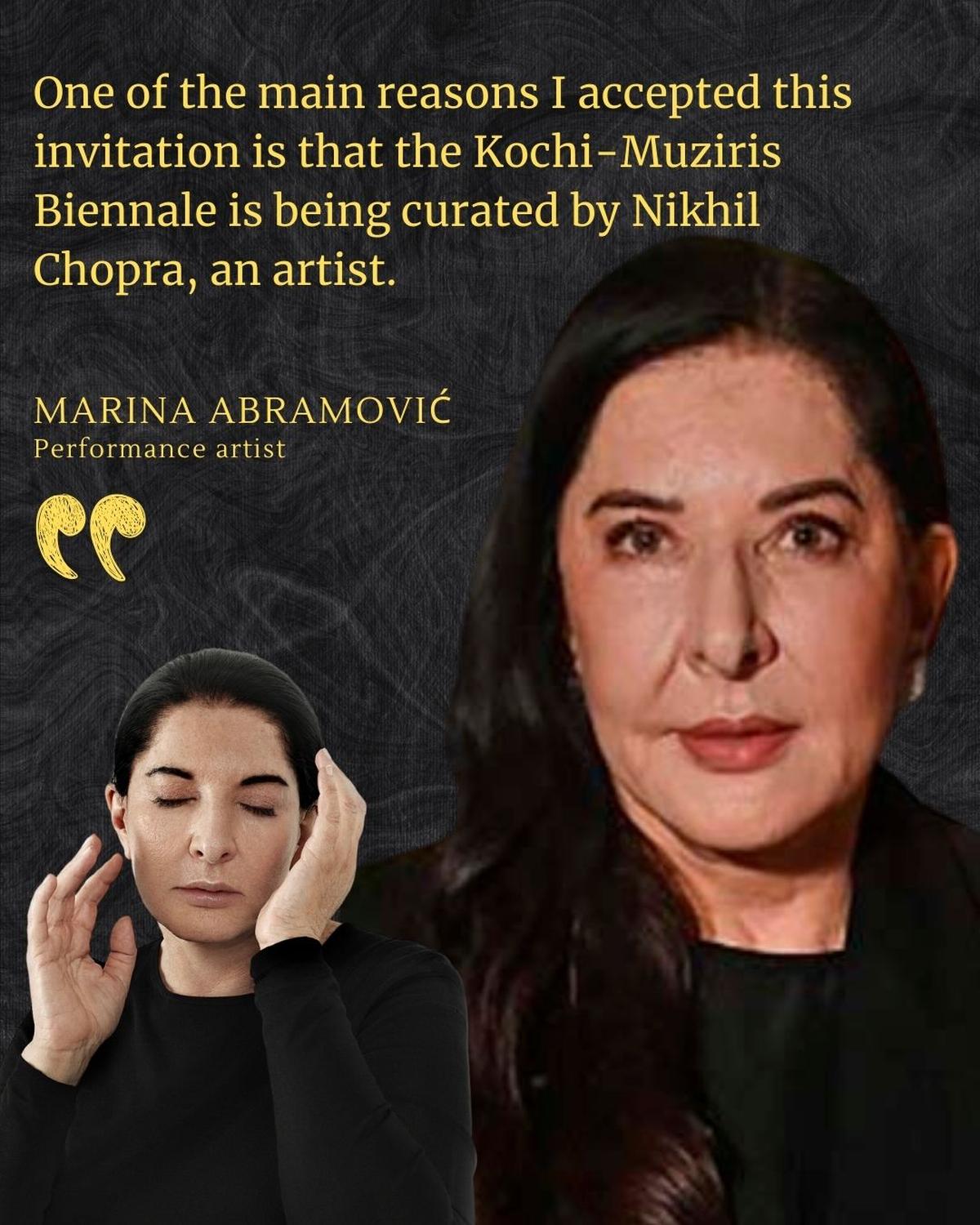
What does it mean for you to be part of the Kochi-Muziris Biennale, under Nikhil Chopra’s curation?
I met Nikhil Chopra when I was curating Marina Abramović Presents in Manchester in 2009. It was a major exhibition dedicated to performance art, bringing together artists whose practices demanded sustained physical and mental commitment from both performer and viewer. Nikhil presented a live performance that unfolded over several days. He stayed in the space for long stretches of time, dressed as a character, slowly drawing large charcoal self-portraits. Visitors could come and go, watching the work change day by day. I discovered a talented, charismatic artist and a compelling performer. One of the main reasons I accepted this invitation is that it is being curated by him, an artist.
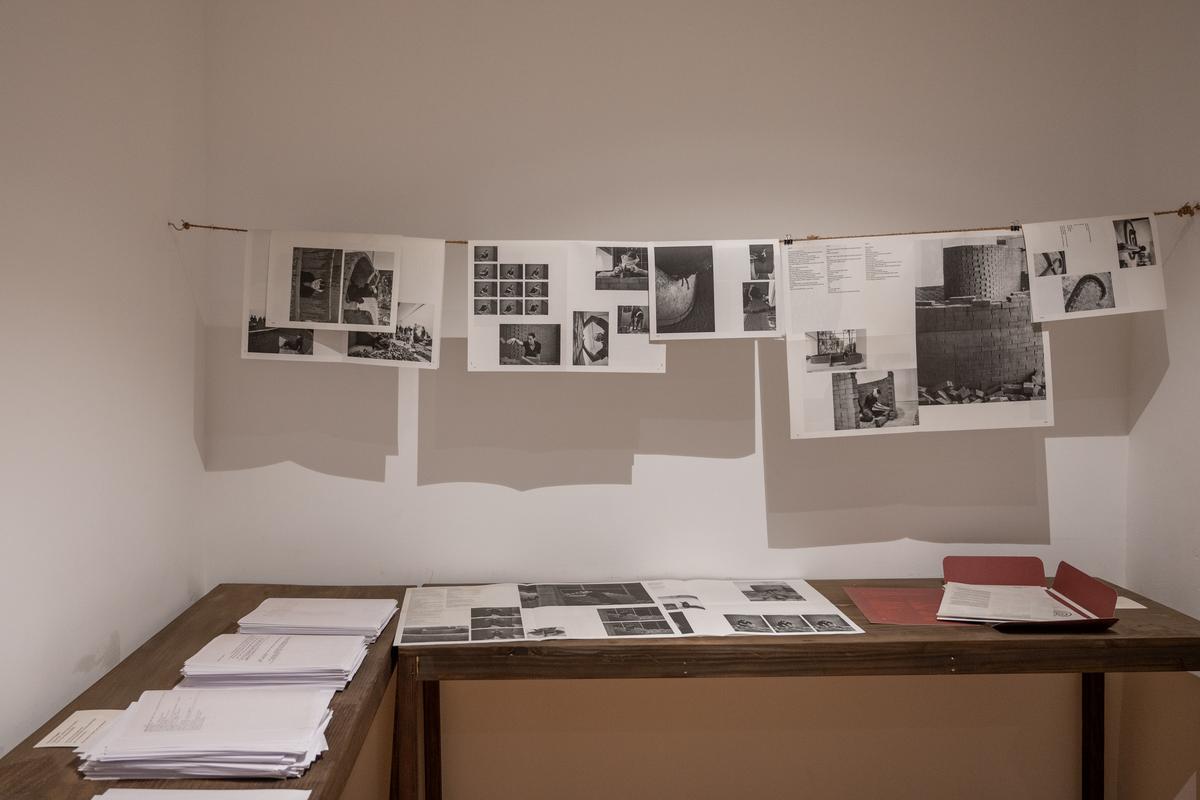
Marina Abramović Archives, KMB 2025-26.
| Photo Credit:
Courtesy of the Kochi Biennale Foundation
Waterfall by Marina Abramović, a three-channel video projection, KMB 2025-26.
| Photo Credit:
Courtesy of the Marina Abramović Archives 2000-2003
In a world that feels increasingly unstable, what role must art play today?
I don’t make sense of the world we’re living in, and I don’t think anyone truly can. Art has to be the oxygen of our lives. It feeds our spirit. Art must lift human spirits but also ask the right questions. Some great art can even predict the future.
What advice would you give young artists now?
Follow your heart. Be true to yourself. Don’t compromise for the art market. Don’t overproduce.
And finally, what keeps you hopeful?
Life is a miracle. We should live fully every day and be happy to be part of this cosmic play.
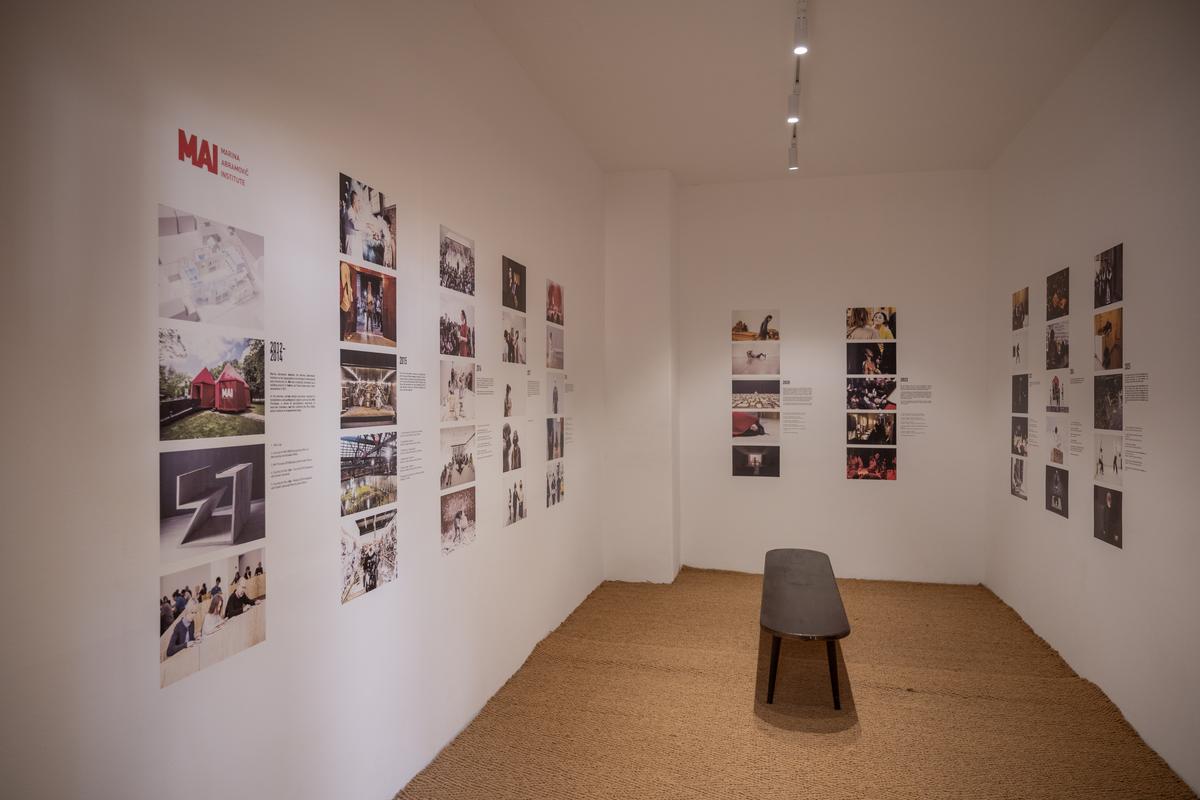
Marina Abramović Archives, KMB 2025-26.
| Photo Credit:
Courtesy of the Kochi Biennale Foundation
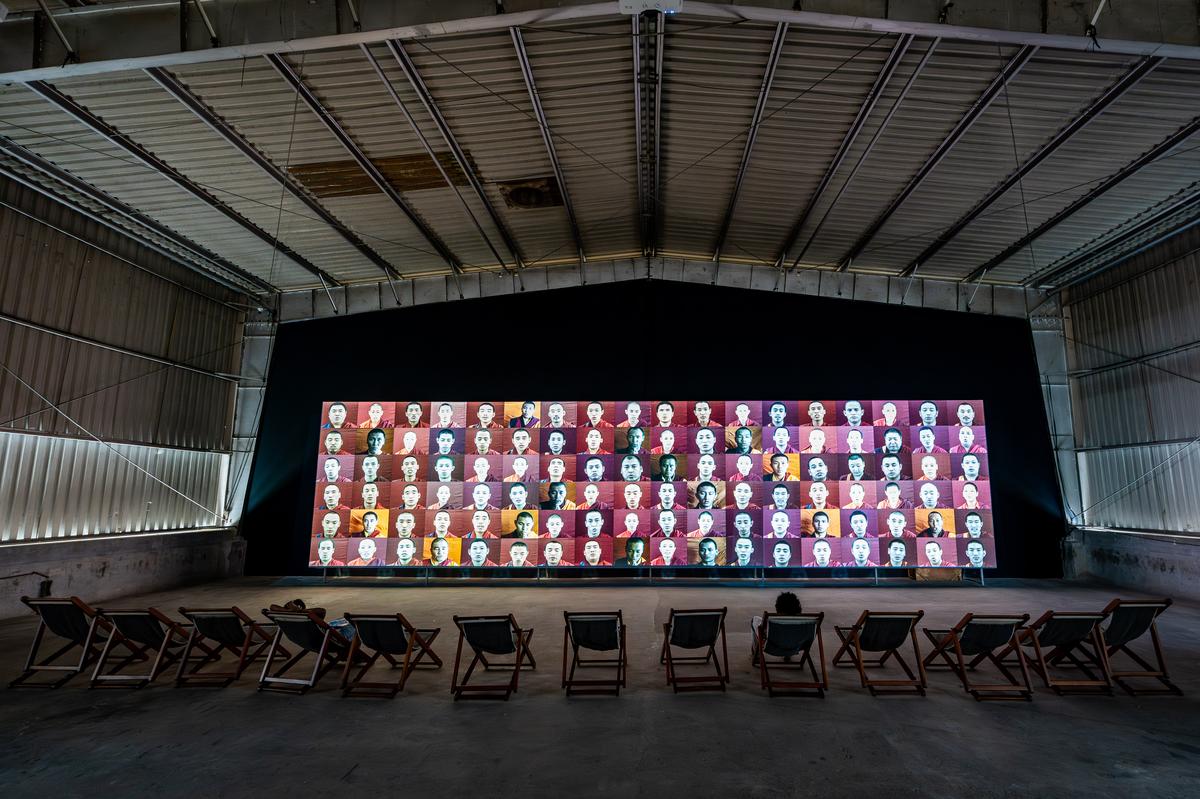
Waterfall by Marina Abramović, a three-channel video projection, KMB 2025-26.
| Photo Credit:
Courtesy of the Kochi Biennale Foundation
Marina Abramović will deliver a lecture on February 10, from 6-8 p.m., at the Kochi-Muziris Biennale. The venue (Fort Kochi or Willingdon Island) and ticket details will be announced soon on the Biennale website. The lecture will accommodate around 1,000 people.
The interviewer specialises in reporting on art, design and architecture.
[ad_2]
Source link